



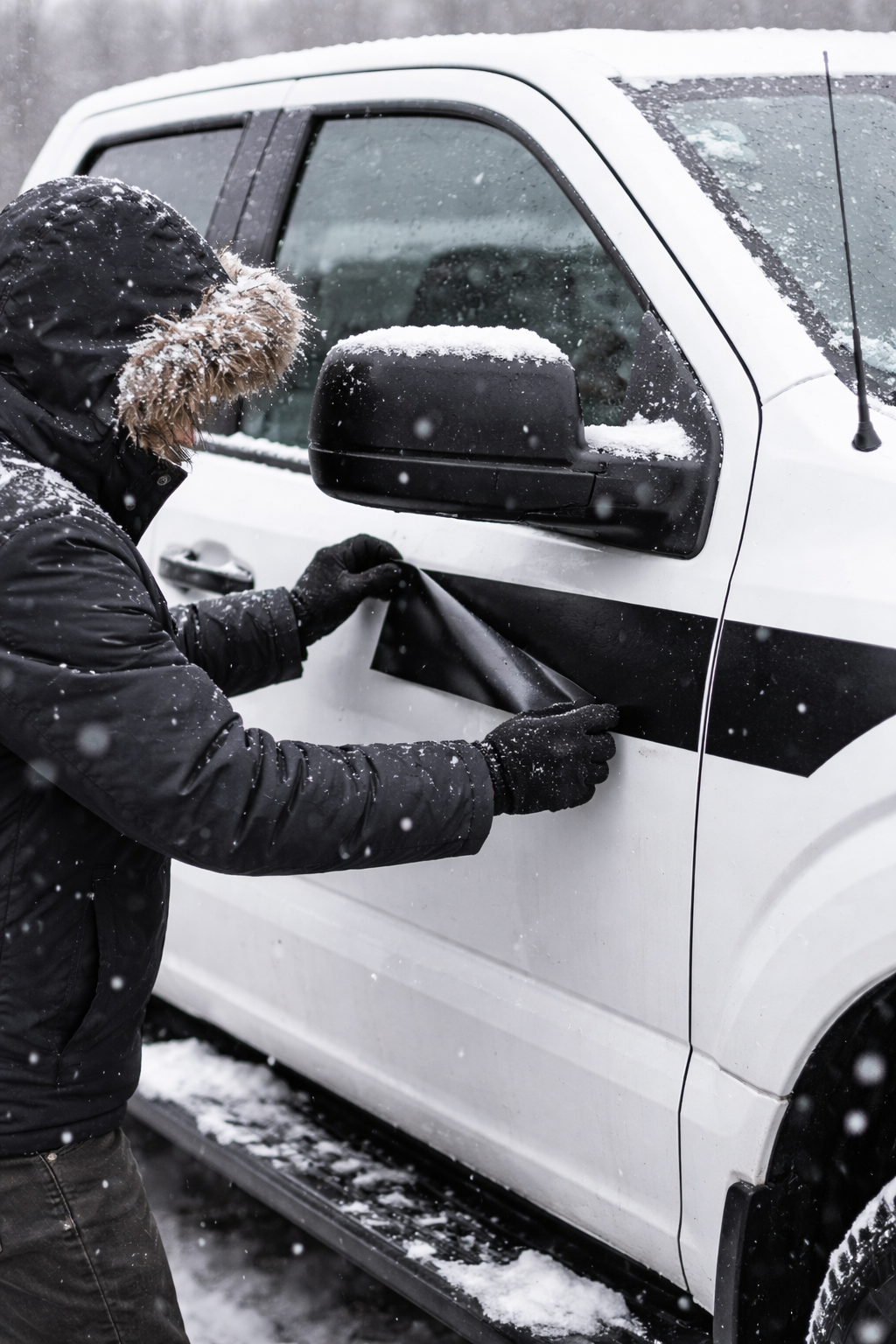

Cold weather can turn a simple vinyl decal install into a frustrating mess of weak adhesion, lifting edges, trapped bubbles, and graphics that look fine at first but start failing days later. The problem is not usually the decal itself. It is the combination of a cold panel, rushed prep, moisture in the air, and not giving the adhesive enough time to settle properly.
If you are planning to install a decal on your car, truck, SUV, or boat when temperatures are low, this guide will help you avoid the most common mistakes. Below, we break down what usually goes wrong, what works better, and when it is smarter to wait for a better day instead of forcing the install.
Why cold weather makes vinyl decal installs harder
Vinyl adhesive likes stable conditions. In colder weather, the film feels stiffer, the adhesive feels less aggressive, and the surface you are applying to may be colder than it looks. Even when the paint appears dry and clean, a cold panel can make it harder for the decal to bond evenly.
That is why winter installs often fail in small ways first. A front edge may not fully seat. A door-seam area may start to lift. A trapped pocket of air may stay in place longer than expected. These little issues often become bigger once the vehicle goes back outside or gets exposed to wind, moisture, or a big temperature swing.
What to avoid when installing decals in cold weather
1. Do not install on a panel that feels cold to the touch
The biggest mistake is assuming that because the garage or driveway feels “not too bad,” the surface is ready. The panel temperature matters just as much as the air around it. If the paint feels cold, the decal is already working against you.
2. Do not rush surface prep
Cold weather makes people want to work faster, but that usually leads to poor prep. Wax residue, road film, quick-detailer spray, and moisture around edges can all interfere with adhesion. A decal can only stick as well as the surface underneath it.
3. Do not fight a large section all at once
Long side decals and stripe kits are harder to control when the film is stiff. Peeling too much backing at once can cause misalignment, wrinkles, or accidental contact where you do not want it.
4. Do not expose the install to water too soon
Even a clean install can fail early if it goes straight into rain, a wash, or repeated freeze-thaw conditions before it has had time to settle. Early aftercare matters more in colder months.
What works better in cold weather
Bring the vehicle and decal into a stable space first
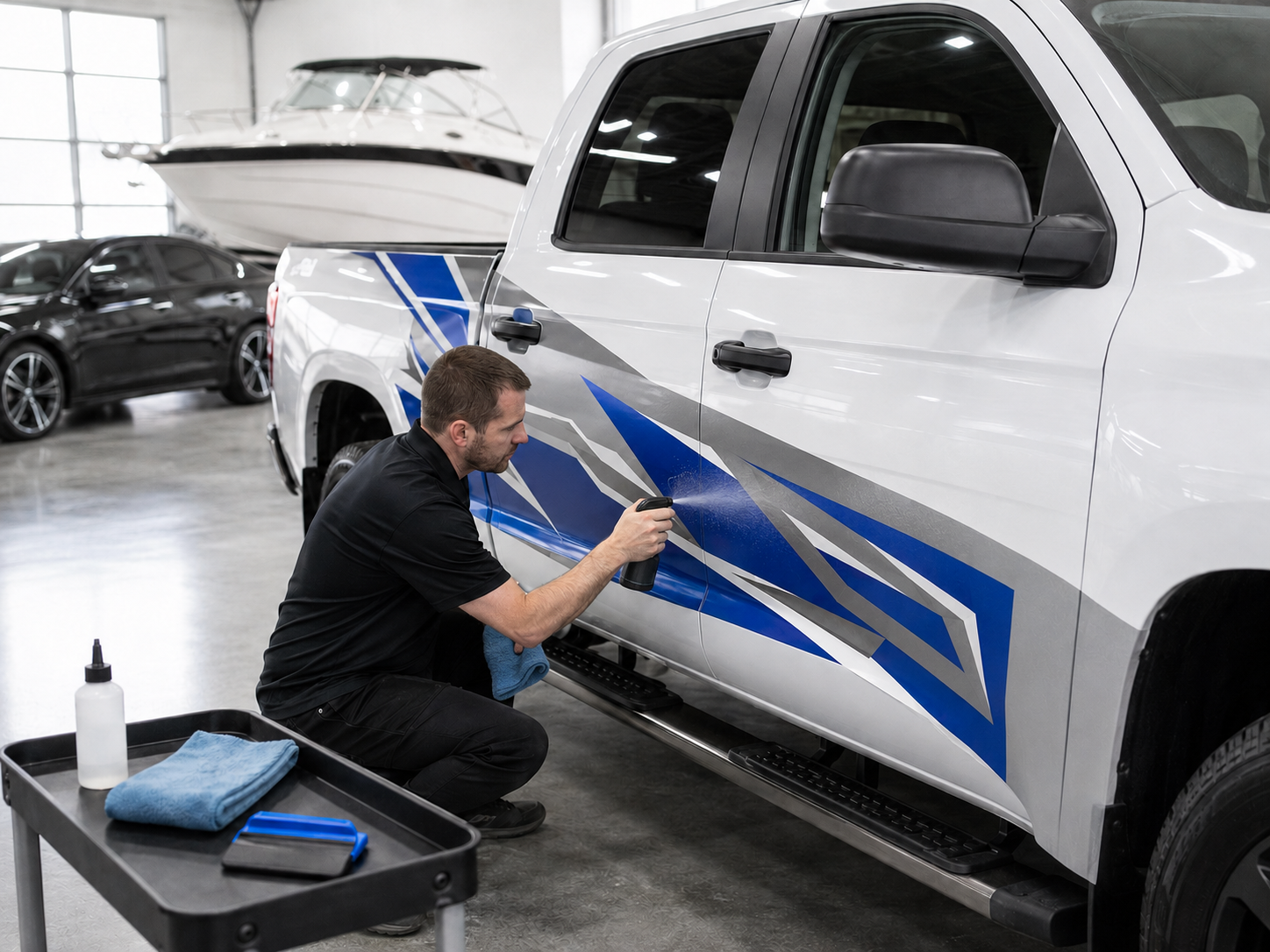
If possible, install indoors where the vehicle, the decal, and the working area have time to warm up and stabilize. That alone makes a big difference in how the vinyl handles and how the adhesive feels during application.
Clean more carefully than you think you need to
Give the panel a proper final wipe-down and pay extra attention to body lines, lower doors, fender edges, and any area that may hold road grime or leftover product. Clean, dry paint gives you the best chance of getting a crisp, long-lasting result.
Use body lines and seams as placement references
Cold installs leave less room for correction, so placement planning matters even more. Measure from repeatable points like door seams, handle height, or a body crease so you are not guessing once the decal starts going down.
Work in smaller, controlled sections
Instead of trying to apply everything at once, go section by section. A slow, controlled install usually beats a fast install every time, especially on long graphics and side decals.
Give the decal time to settle
Once the decal is on, keep the vehicle in a stable environment if you can. Let the adhesive settle before exposing it to harsh cold, moisture, or a wash. This is one of the easiest ways to protect the install you just finished.
When it is better to wait for a warmer day
Sometimes the best installation tip is simply not to install yet. If the vehicle is sitting outside in damp cold air, the panel temperature is low, and you do not have a sheltered place to work, waiting can save you time, frustration, and wasted vinyl.
This is especially true for larger decals, long stripes, or graphics that need clean alignment across multiple panels. A better install day usually gives a better final result.
Cold-weather install checklist
- Bring the vehicle and decal into a stable working space when possible
- Make sure the panel is fully clean and dry
- Plan your alignment using seams or body lines
- Apply in smaller, controlled sections
- Avoid early exposure to rain, washing, or major temperature swings
- Check the product-specific installation guidance before starting
Need more help before you install?
For step-by-step application help, see our vehicle graphics installation instructions. If you want to learn more about the films we use, visit our materials page. You can also read vinyl decal installation fails: what not to do for more common mistakes to avoid.
FAQ
Can I install vinyl decals outside in winter?
You can, but results depend heavily on panel temperature, moisture, wind, and how controlled your working conditions are. If the surface is cold and the environment is unstable, the risk of poor adhesion goes up quickly.
Why do decal edges lift more in cold weather?
Cold conditions make the film less flexible and the adhesive less eager to bond right away. If prep or pressure is inconsistent, the edges are usually the first place where problems show up.
Should I wash the vehicle right after a winter install?
No. It is better to give the decal time to settle before exposing it to water, especially in colder weather where adhesion can take longer to stabilize.
Is cold weather worse for large decals than small ones?
Usually yes. Larger decals are harder to control, more sensitive to alignment issues, and more likely to show problems if the panel is too cold or the install is rushed.
What is the safest approach if I am unsure?
Wait for better conditions or move the install indoors. A clean, calm, warmer install environment usually leads to a much better result than trying to force it on the wrong day.



Leave a comment (all fields required)