




Most decal “fails” are really install conditions
We make our graphics to last, but even premium vinyl can fail fast if the conditions are wrong. A vinyl decal isn’t a sticker that “finishes” the moment you squeegee it down—its adhesive needs time, pressure, and the right temperature to bond properly.
This post is a quick reality-check on the most common installation mistakes we see (and how to avoid them) so your decal looks clean and stays put for the long haul.
Fail #1: Water too soon (boats + car washes)
This one is more common than you’d think. We once had a customer install a vinyl cut shark decal on their boat… then take it out on the water about an hour later. The decal didn’t get enough time for the adhesive to bond, and the edges started lifting.
What not to do
- Don’t launch a boat shortly after installation.
- Don’t hit a car wash (especially a high-pressure wash) right after install.
- Don’t soak the decal area with water or cleaning chemicals the same day.
Do this instead
- Wait at least 24 hours before any water exposure.
- For boats, heavy rain, or high-pressure washes: aim for 48–72 hours whenever possible.
- If you must clean sooner, use a gentle wipe around the area—no pressure blasting the edges.
Need the full step-by-step? Use our install guide here: Vehicle Graphics Installation Instructions
Fail #2: Installing in freezing temperatures
Cold weather is a decal killer. Below-freezing installs often lead to immediate edge lift or sections that simply refuse to stick. The vinyl gets stiff, surfaces can hold moisture, and the adhesive can’t “wet out” and grab the paint properly.
What not to do
- Don’t install outdoors when it’s below freezing.
- Don’t apply vinyl to a cold panel and hope it “warms up later.”
- Don’t use a quick blast of heat as a shortcut while the panel is still cold overall.
Do this instead
- Install in a garage or indoor space if possible.
- Bring the vinyl and the vehicle into a warmer environment first.
- A good rule: install when the surface is comfortably warm to the touch (not icy/cold).
Fail #3: Windy-day installs that turn into a wrestling match
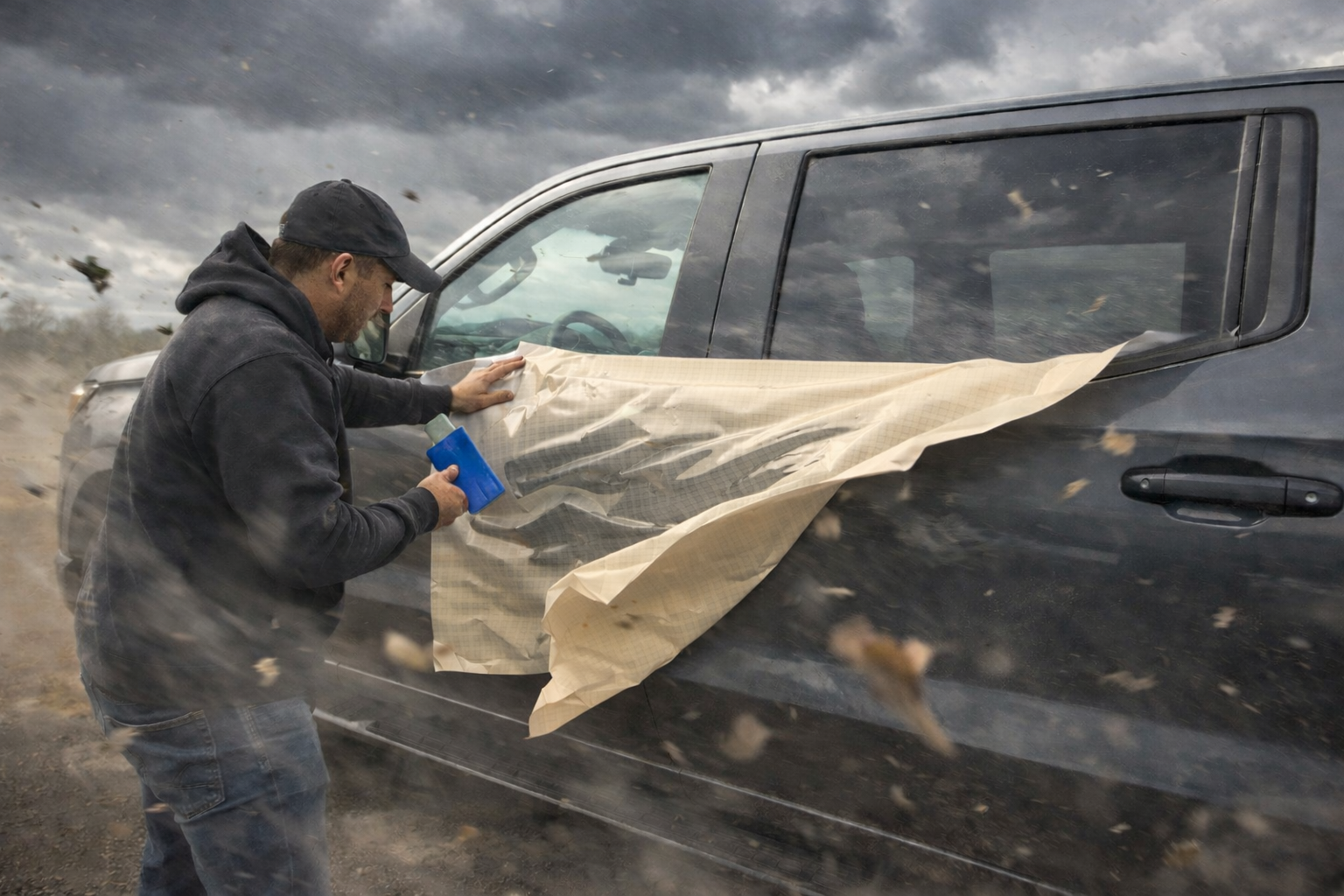
Wind makes large decals hard to control, and it also increases contamination risk. Dust, grit, and tiny debris get blown onto the adhesive side, and once that happens you’re fighting bubbles and weak adhesion from the start.
What not to do
- Don’t attempt a large side graphic outdoors in gusty wind.
- Don’t peel the backing off too early and let the decal flap around.
- Don’t “fight through it” if debris is landing on the adhesive.
Do this instead
- Install indoors or create a windbreak if you absolutely must work outside.
- Keep the backing on as long as possible and use controlled “peel as you apply” technique.
- If contamination happens, pause—don’t trap grit under the vinyl.
Fail #4: Rushing prep (wax, silicone, and “looks clean enough”)
Paint can look clean and still be covered in wax, ceramic products, silicone detail sprays, or road film. Those invisible layers are one of the fastest ways to get lifting edges and early failure.
What not to do
- Don’t install over fresh wax, ceramic coatings, or oily detail sprays.
- Don’t skip final wipe-down because the panel “looks fine.”
Do this instead
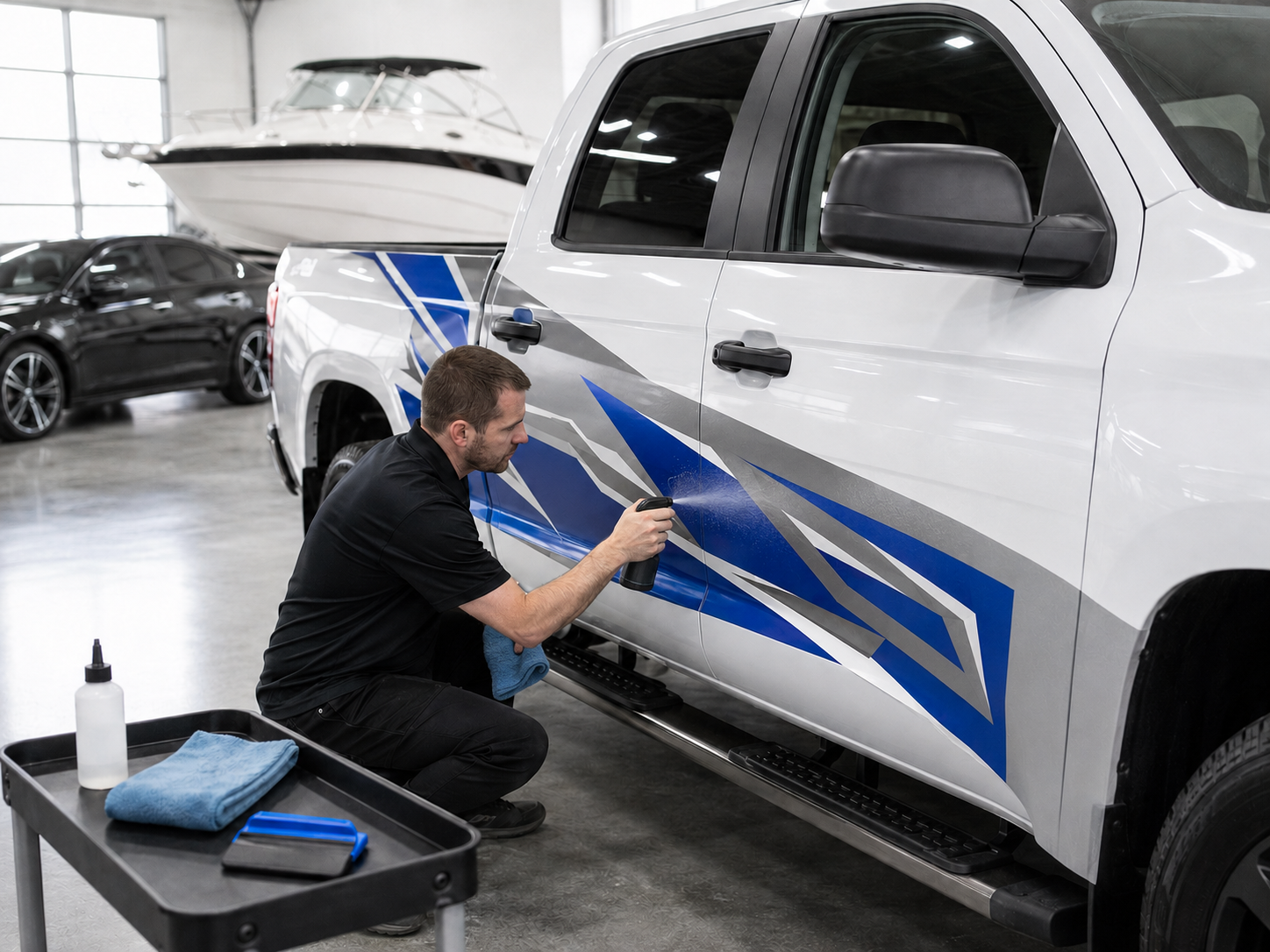
- Wash the area, then do a proper final wipe-down of the install zone.
- Make sure the panel is fully dry before vinyl touches it.
Fail #5: “I’ll fix the edges later” (pressure matters)
Vinyl adhesive needs firm, consistent pressure. If edges aren’t pressed down well, that’s where water and wind start the lifting process.
Do this instead
- Work methodically and apply firm pressure across the decal, especially edges.
- After install, do a quick edge check and press again where needed.
Quick decal care rules (the simple version)
- Wait 24 hours minimum before any water. Prefer 48–72 hours for boats or high-pressure washing.
- Avoid freezing installs. Warm surface + warm vinyl = strong bond.
- Avoid windy installs for large graphics. Wind adds contamination and misalignment risk.
- Prep matters. Invisible wax/silicone is a common cause of lifting.
FAQ: Vinyl decal installation mistakes
How long should I wait before washing my car after installing a decal?
At least 24 hours. If it’s a high-pressure wash or an automatic wash, 48–72 hours is even better.
How long should I wait before taking my boat into the water?
Minimum 24 hours, but for best results aim for 48–72 hours whenever possible—especially for graphics near the waterline or areas that get sprayed.
Can I install vinyl decals in winter?
Yes—if you can install in a warm garage/indoor space and the surface is warm. Outdoor installs below freezing are a common reason decals won’t stick properly. If you use a heat gun to warm the vehicle surface that can help, but it can also complicate the install if your nor careful.
What happens if it’s windy during installation?
Wind makes the vinyl harder to control and blows debris onto the adhesive side. That leads to bubbles, weak bonding, and lifting edges.
Is it okay to install after waxing the vehicle?
Not recommended. Wax, ceramic products, and silicone detail sprays can block the adhesive from bonding to the surface.
My decal edges are lifting—what should I do?
Stop water exposure, press edges firmly, and make sure the area is clean and dry. If the decal was installed in poor conditions (cold/windy/wet) it may need to be replaced to fully fix it.
Do you have a step-by-step install guide?
Yes—use our full instructions here: Vehicle Graphics Installation Instructions
Where can I see more real customer installs?
Check out customer photos here: Customer Gallery
Bottom line: give the adhesive time, avoid extreme cold, and don’t fight wind. Those three changes prevent most “vinyl failures” we hear about.



Leave a comment (all fields required)